



Podium + ShopMCP
Mine conversations and reviews for FAQ demand, PDP gaps, PLP buying-guide needs, templates, and reputation themes.
Podium is where many ecommerce and retail teams hear the questions customers ask before they buy: product fit, delivery timing, compatibility, installation, warranty, returns, store availability, and trust concerns that never make it into a dashboard.
ShopMCP connects Podium to Claude, ChatGPT, Cursor, and other MCP-aware clients so those conversations and reviews can become usable ecommerce intelligence. Instead of leaving common questions inside inbox threads, operators can turn them into FAQ plans, PDP improvements, category guidance, support templates, and reputation briefs.
The highest-value use case is simple: listen to what customers repeatedly ask, prove where that answer belongs, and route the approved update to the right website system.
What's now possible with Podium in Claude or ChatGPT
- "Mine Podium conversations for the most common product questions from the last 30 days." Turn repeated buyer questions into a ranked FAQ demand map.
- "Show which questions should become PDP FAQs, category FAQs, blog sections, or support templates." Separate product-specific answers from broader buying-guide content.
- "Find product-page objection gaps using Podium reviews and conversations." Map customer hesitation to product proof, photos, specifications, or trust copy.
- "Audit Podium templates against the questions customers actually ask." Find stale, missing, duplicated, or risky answer assets.
- "Summarize reputation themes by location, product, or service area." Review recent feedback and reviews without reading every thread manually.
- "Build a content plan from Podium, Shopify, Google Search Console, GA4, and support tickets." Connect customer language to traffic, conversion, and merchandising context.
The customer-question to website FAQ play
Most FAQ projects start from guesswork. Podium lets the team start from live customer demand.
ShopMCP's Podium playbooks can group repeated questions, estimate evidence strength, and recommend where each answer belongs:
| Customer question pattern | Best placement | Why it matters |
| Product fit, sizing, compatibility, installation, included parts | PDP FAQ or PDP content block | Removes doubt beside the add-to-cart decision |
| Category comparison, use-case selection, buying criteria | PLP or category buying guide | Helps shoppers choose before they pick a SKU |
| Shipping, returns, warranty, store availability | Sitewide FAQ or policy page | Reduces repetitive support demand |
| Long-tail education or pre-purchase research | Blog or guide content | Captures demand before the shopper reaches a product page |
| Repeated support answer with no website destination | Podium template plus content backlog | Improves answer speed while content is reviewed |
The output is not just a list of FAQs. It is a placement plan with evidence, confidence, suggested wording, and the next owner.
Cross-integration use cases
Podium plus Shopify, Neto, BigCommerce, Magento, or WooCommerce
Podium shows what shoppers ask. Commerce platforms show which products, categories, and collections need the answer. ShopMCP can use Podium demand to recommend PDP and PLP updates, then route approved website publishing through the connected commerce or CMS tool.
Podium plus Google Search Console
Customer language often matches search demand. Podium question clusters beside Search Console queries can reveal FAQ and buying-guide opportunities that help both conversion and organic visibility.
Podium plus GA4 and Microsoft Clarity
If customers ask the same pre-purchase question and GA4 or Clarity shows page exits, short engagement, or product-page hesitation, the website improvement has stronger evidence than a normal content brainstorm.
Podium plus Gorgias or Zendesk
Podium conversations and support tickets together show whether an issue is isolated to one channel or repeated across the whole customer experience. That helps decide whether the fix is a template, a Help Center article, a product-page update, or an operations issue.
Podium plus Klaviyo or HubSpot
Questions that appear before purchase can also improve lifecycle content. Use Podium to find objections, then turn approved answers into campaign sections, post-purchase education, or segmented follow-ups.
Built for operators, agencies, and support-led growth
Ecommerce operators. Convert real buyer questions into PDP, PLP, blog, and FAQ priorities without starting from a blank content calendar.
Support and CX teams. See which answers are missing, which templates need updating, and which questions should stop coming into the inbox.
Merchandising teams. Identify the product claims, images, measurements, reviews, and proof points customers need before they buy.
Agencies. Bring a stronger client recommendation than "add more FAQs." Show the evidence, the page destination, the expected customer impact, and the publishing plan.
Setup
- Open ShopMCP workspace settings and choose Podium.
- Connect Podium with the secure app connection.
- ShopMCP verifies the account by reading available Podium locations.
- Keep customer-visible writes off while the integration is reviewed.
- Start with the FAQ placement, product answer gap, template audit, or reputation snapshot playbooks.
Podium uses an app-based OAuth connection for customer accounts. ShopMCP stores credentials encrypted at rest and keeps the manual bearer-token fallback available only for app-review and sandbox validation.
Safety, in plain English
- Reads first. Podium launches as an admin-preview integration with customer-visible writes off.
- Publishing stays governed. ShopMCP can recommend website changes from Podium evidence, but the actual publish step belongs to Shopify, WordPress, BigCommerce, Magento, Neto, HubSpot, or the connected CMS after approval.
- Conversation samples stay bounded. FAQ mining and theme analysis use focused samples instead of dumping unnecessary customer history into the assistant.
- PII should be minimized. Operators should ask for question patterns, themes, and evidence counts unless a specific customer support investigation requires customer-level context.
- Templates need review. Suggested response or FAQ wording should be approved by the business before it appears on a website or in a customer-facing answer.
What's under the hood
ShopMCP's Podium connector reads account context, locations, contacts, conversations, messages, templates, campaigns, reviews, review summaries, feedback, products, and webhook metadata where the connected Podium account and scopes allow it.
The first release focuses on read-only customer intelligence and composite playbooks: FAQ demand mining, review-theme mining, product answer gap scanning, template gap auditing, location mapping, data-feed readiness, webhook coverage, and reputation snapshots.
Connection guide: Connect Podium to ShopMCP.
Official API basis: Podium API reference and Podium OAuth scopes.
Works with
Claude Desktop, Claude web, ChatGPT with MCP support, Cursor, and any MCP-compatible assistant.
Pricing
Podium MCP is included in ShopMCP workspaces where the integration is enabled. You bring your own Podium account. See pricing.
Frequently asked questions
What is Podium MCP?
Podium MCP is the ShopMCP integration that lets AI assistants inspect approved Podium customer conversations, reviews, templates, products, and location context through the Model Context Protocol.
Can ShopMCP turn Podium questions into website FAQs?
Yes. ShopMCP can mine repeated Podium questions, group them by theme, and recommend whether each answer belongs on a PDP, PLP, blog, Help Center, template, or sitewide FAQ. Publishing still requires approval and should happen through the connected commerce or CMS system.
Does Podium MCP write back to Podium?
Not in the public launch posture. Podium starts read-first with customer-visible writes off while OAuth scopes, app review, and approval flows are validated.
Can this work with Shopify or WordPress?
Yes. Podium supplies customer-question evidence. Shopify, WordPress, BigCommerce, Magento, Neto, HubSpot, or another connected CMS can be used for approved publishing workflows.
Is the manual token option an API-key fallback?
No. Podium's public docs do not expose a Neto-style API key for this use case. ShopMCP keeps a manual bearer-token fallback for app-review and sandbox validation while the secure app connection remains the default path.
Related reading
- Pair with: Shopify MCP - publish approved PDP and collection FAQ updates.
- Pair with: Google Search Console MCP - validate FAQ demand against organic search queries.
- Pair with: GA4 MCP - connect question themes to page engagement and conversion paths.
- Pair with: Gorgias MCP - compare Podium questions with support ticket demand.
- Pair with: WordPress MCP - route approved blog and Help Center content.
Connect Podium in 60 seconds - start your free trial
Ask what customers keep asking, where that answer belongs on the website, and what content should be approved next. Reads first, writes gated, built for ecommerce operators. Start your connection.
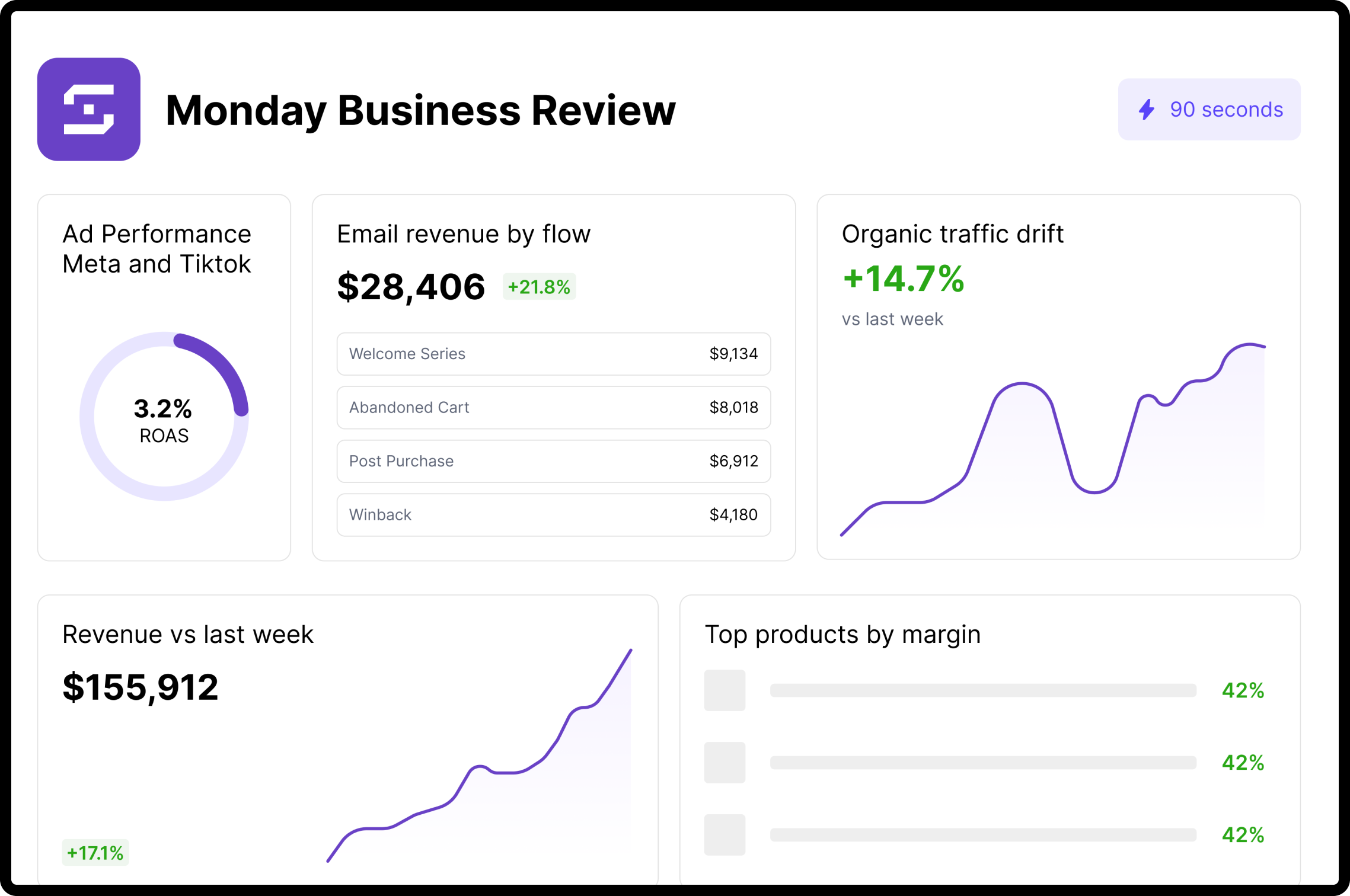
Your coffee's still warm. Your Monday review is done.
Connect one platform in 5 minutes. Run your first playbook before the kettle boils.

2026 Copyright © ShopMCP. All rights reserved. A Perceptiv Digital initiative.