




eBay + ShopMCP
Find underperforming listings, fulfilment risks, payout issues, and ad opportunities across seller accounts.
eBay sellers juggle two listing models, three marketplaces, ad campaigns, payouts, disputes, and a deep tail of legacy item-specifics — usually across multiple tabs of Seller Hub. ShopMCP turns it into a chat. Every listing, every order, every dispute, every campaign — in plain English with Claude, ChatGPT, or Cursor. "Which listings need item-specific cleanup?" "Where is fulfilment risk building?" "Are Promoted Listings actually working?" One sentence, one chat, every seller account.
What's now possible with eBay in Claude or ChatGPT
You stop the Seller Hub tab marathon. You start running the marketplace.
- "Check active listings for missing recommended item specifics and category aspect gaps. Group by marketplace and urgency." — the listing-quality cleanup queue.
- "Run the stale inventory playbook — compare inventory, traffic, orders, and recent sales signals." — the merchandising queue.
- "Recent orders and fulfillments — flag orders without tracking, disputes, refunds, or high-risk customer service states." — the fulfilment risk surface.
- "Review eBay ad campaigns, keywords, bid suggestions, and marketing reports. Summarise ROAS risk and budget actions." — Promoted Listings audit.
- "Compare eBay listing stock, price, and sales against Shopify product data for the same SKUs. Flag mismatches." — the cross-channel mismatch the listing-tool can't catch.
- "Top 20 listings by 30-day revenue across all marketplaces." — the performance leaderboard.
- "Open disputes and the underlying orders — biggest financial exposure first." — dispute triage.
- "Recent payouts and what's coming in the next 7 days." — cash visibility for the marketplace side.
- "Negative feedback in the last 30 days — themes." — the service-quality audit.
- "Across all 5 seller accounts, today's orders and any in dispute or refunded." — agency rollup.
Reads on. Writes (listing revisions, inventory upserts, offer publishes, refunds, dispute evidence, ad changes, messages, feedback) gated behind global and workspace switches with explicit per-action confirmation.
Paste-ready prompts
"Check active eBay listings for missing recommended item specifics, category aspect gaps, and policy issues. Group by marketplace and urgency."
The listing-quality cleanup queue. Walks category metadata, listing recommendations, policies, and active listings into one priority list.
"Run the eBay stale inventory playbook and compare inventory, traffic, orders, and recent sales signals."
The merchandising queue. Which listings are dying quietly — and what to do about each one.
"Review recent eBay orders and fulfillments. Flag orders without tracking, disputes, refunds, or high-risk customer-service states."
Fulfilment risk surface. Catches problems before they become negative feedback.
"Review eBay ad campaigns, keywords, bid suggestions, and marketing reports. Summarise ROAS risk and budget actions."
Promoted Listings audit. The check that justifies the ad spend.
"Compare eBay listing stock, price, and sales against Shopify product data for the same SKUs. Flag mismatches."
The cross-channel mismatch. ShopMCP's wedge — marketplace and storefront in the same chat.
The cross-integration plays eBay alone can't ship
An eBay-only chat answers eBay questions. The interesting marketplace questions cross stacks — eBay ↔ Shopify, eBay ↔ Neto, eBay ↔ Cin7 / Unleashed, eBay ↔ Xero / QuickBooks. ShopMCP runs the join.
eBay listings × Shopify catalogue
The same SKUs on eBay and Shopify — stock, price, sales side by side. The mismatches you'd otherwise discover in a customer complaint.
Marketplace orders × inventory truth
eBay orders joined to Cin7 / Unleashed stock. Are you about to oversell?
Promoted Listings × overall channel ROAS
eBay ad spend joined to overall eBay channel revenue (organic + promoted). The honest channel margin.
Payouts × accounting
eBay payouts joined to Xero or QuickBooks bank deposits. The reconciliation that's supposed to happen weekly but usually doesn't.
Built for the four people who actually sell on eBay
Multi-channel operators on the Shopify / Neto + eBay stack. The reason your AU / UK / US seller account exists — surfaced in the same chat as your DTC store.
eBay specialists and consultants. Listing quality, item-specifics, category aspects — your daily work, now conversational.
Aggregators and roll-ups. Twenty brands, twenty seller accounts. Portfolio-level listing health, stale inventory, and Promoted Listings audits.
Customer service teams. Disputes, refunds, negative feedback themes — the triage queue your team builds by clicking through orders.
Setup in 60 seconds
- Click Connect eBay in your workspace settings. Pick the primary marketplace (US, AU, UK).
- Sign in to the seller account and approve ShopMCP through eBay OAuth.
- Open Claude, ChatGPT, or Cursor and ask your first question.
You don't need to create an eBay Developer account or paste app credentials — ShopMCP owns the app registration. Agencies connect each seller account separately and route prompts via the store selector.
Safety, in plain English
- Reads-first at launch. Writes (listing revisions, inventory upserts, offer publishes, refunds, dispute evidence, ad changes, messages, feedback) gated behind global and workspace switches.
- Listing-model safety. ShopMCP keeps Inventory API and legacy listings separate so the agent doesn't revise an Inventory API offer via the legacy bridge — or push a legacy listing through Inventory API without explicit migration.
- Marketplace-aware. Tools route to the right marketplace (`EBAY_US`, `EBAY_AU`, `EBAY_GB`) based on your account configuration.
- OAuth-scoped, encrypted at rest. Revoke from eBay in one click; per-tool audit log.
When to use ShopMCP, when to stay in Seller Hub
Seller Hub is right for listing creation, the Manager dashboard, complex policy setup, and the high-touch listing creative work. ShopMCP is right for the audits and the cross-channel questions:
- "Listings missing item specifics — ranked by impact."
- "Stale inventory across the marketplace."
- "Fulfilment risk on recent orders."
- "Cross-channel: eBay vs Shopify performance for the same SKU."
What's under the hood
ShopMCP's eBay connector ships 91 tools — account setup (privileges, payment / fulfilment / return / business policies, sales tax, rate tables), category metadata and listing-quality requirements (aspects, policies, recommendations, compliance), the modern Inventory API (items, offers, fees, locations, upserts, price / quantity, publish / withdraw, migration), legacy active listings (read, revise fixed-price, revise inventory, end), orders and fulfilments (with shipment confirmation), refunds and payment disputes (with evidence upload), finance (transactions, summaries, payouts, seller funds, billing), marketing (Promoted Listings campaigns, ad groups, keywords, bid suggestions, reports, promotions, negotiation offers), analytics, stores, messages, feedback, feeds. Plus six composite playbooks (listing health, pricing gap, stale inventory, fulfilment risk, Promoted Listings ROAS, cross-channel review).
Full endpoint-by-endpoint reference: the eBay integration spec.
Works with
Claude (Desktop, web, Claude Code), ChatGPT (with MCP support), Cursor, and any MCP-compatible assistant. One encrypted connection per seller account; marketplace-aware routing.
Pricing
eBay MCP is included in every ShopMCP workspace. Flat per-workspace pricing — not per-marketplace, not per-listing. Connect every seller account you manage. See pricing.
Frequently asked questions
What can I actually ask eBay through Claude or ChatGPT?
Anything you'd open Seller Hub for, plus the cross-channel questions Seller Hub can't surface. Listing quality and item-specifics, stale inventory, order and fulfilment status, dispute and refund context, payouts and finance, Promoted Listings performance, store stats, messages, feedback themes. Once writes are on: revise listings, manage Inventory API offers, issue refunds, respond to disputes, manage ad campaigns — every change confirmed.
Why two listing models?
eBay's modern Inventory API is SKU-based; many active listings were created in Seller Hub or older tools and run on the legacy Trading API. ShopMCP keeps both surfaces separate so the agent doesn't accidentally edit one through the other.
Does it support US, AU, and UK?
Yes. Marketplace defaults are `EBAY_US`, `EBAY_AU`, `EBAY_GB`. Route prompts to specific marketplaces in multi-marketplace accounts.
Can Claude revise listings or refund orders?
Tools exist; they're gated. Writes are off until global launch readiness completes and a workspace flips the switch. Every write asks for explicit per-action confirmation — listing IDs, marketplace, exact field changes shown.
Does it support multiple seller accounts?
Yes. Each authorisation becomes its own encrypted connection. Writes require an explicit target seller account.
Does this include eBay Logistics?
Not in v1. eBay documents the Logistics API as limited-release and restricted; we'll add it when access is generally available.
Related reading
- Keystone: The complete guide to Shopify MCP
- Pair with: Shopify MCP — marketplace × storefront for the same SKUs
- Pair with: Neto MCP — AU sellers running Neto plus marketplaces
- Pair with: Cin7 Core MCP or Unleashed MCP — inventory truth vs eBay listing quantity
- Sibling: Amazon Seller MCP, Mirakl Connect MCP
Connect eBay in 60 seconds — start your free trial
Every seller account, every marketplace, one chat, every marketplace question answered in plain English. Reads-first at launch — writes ship behind explicit confirmation. Start your connection.
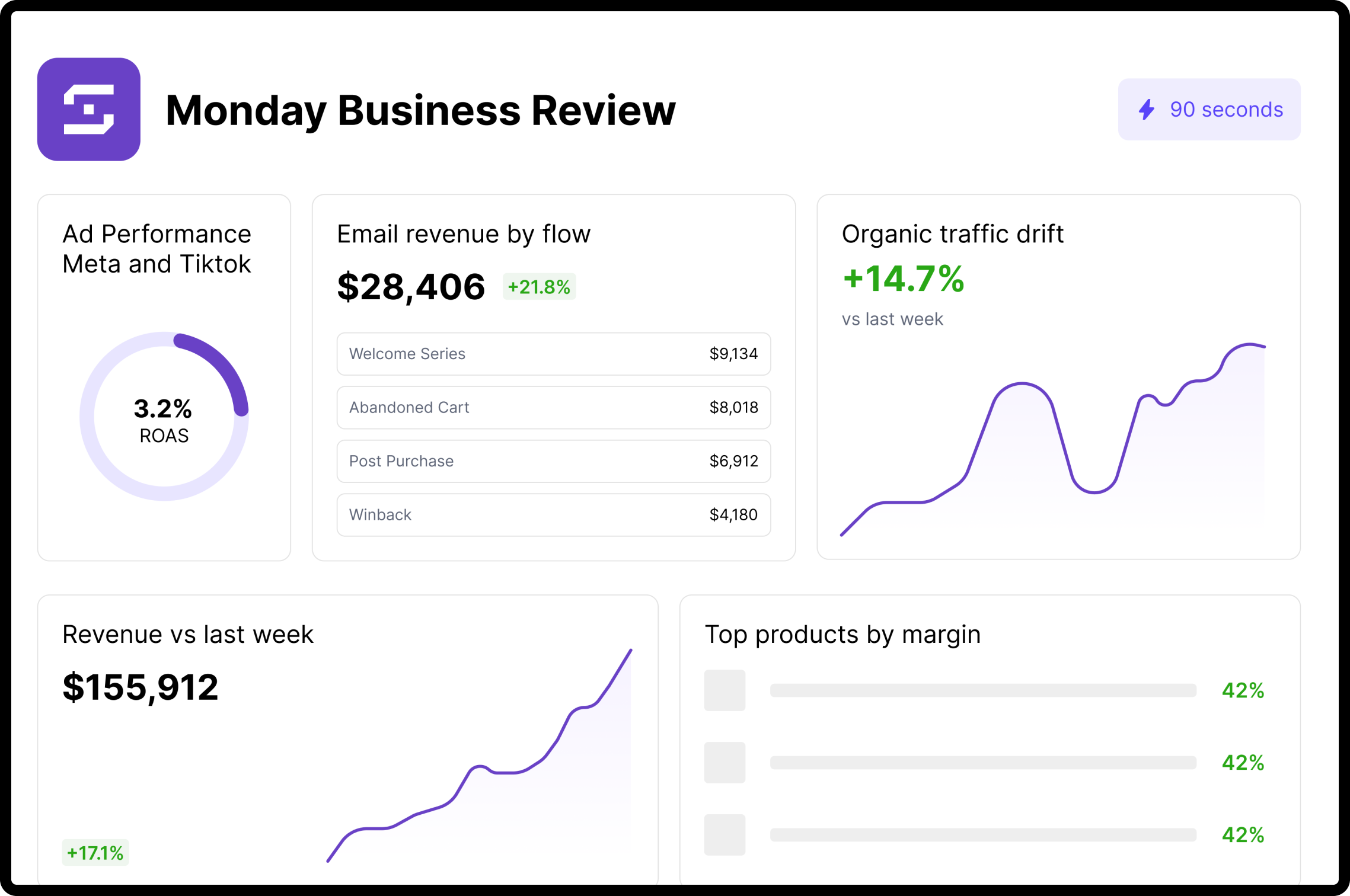
Your coffee's still warm. Your Monday review is done.
Connect one platform in 5 minutes. Run your first playbook before the kettle boils.

2026 Copyright © ShopMCP. All rights reserved. A Perceptiv Digital initiative.